The AI Operating System for Enterprises.
Your team builds your software now. In weeks.
- Order triage
- Support desk
- Promotions
- Inventory watch
Tools
Connectors, data, deploy
Rules
Isolation, permissions, limits
Method
How agents build and act
- Claude
- GPT
- Gemini
- Kimi
- DeepSeek
- Qwen
- Llama
- GLM
- Mistral
Trusted by retail and hospitality teams at








A chatbot answers. An agentic app holds a job.
Software as a surface
Scaling means hiring.
Software that operates
Exceptions go to a person.
Scaling means setting policy.
Three agentic apps, worked through
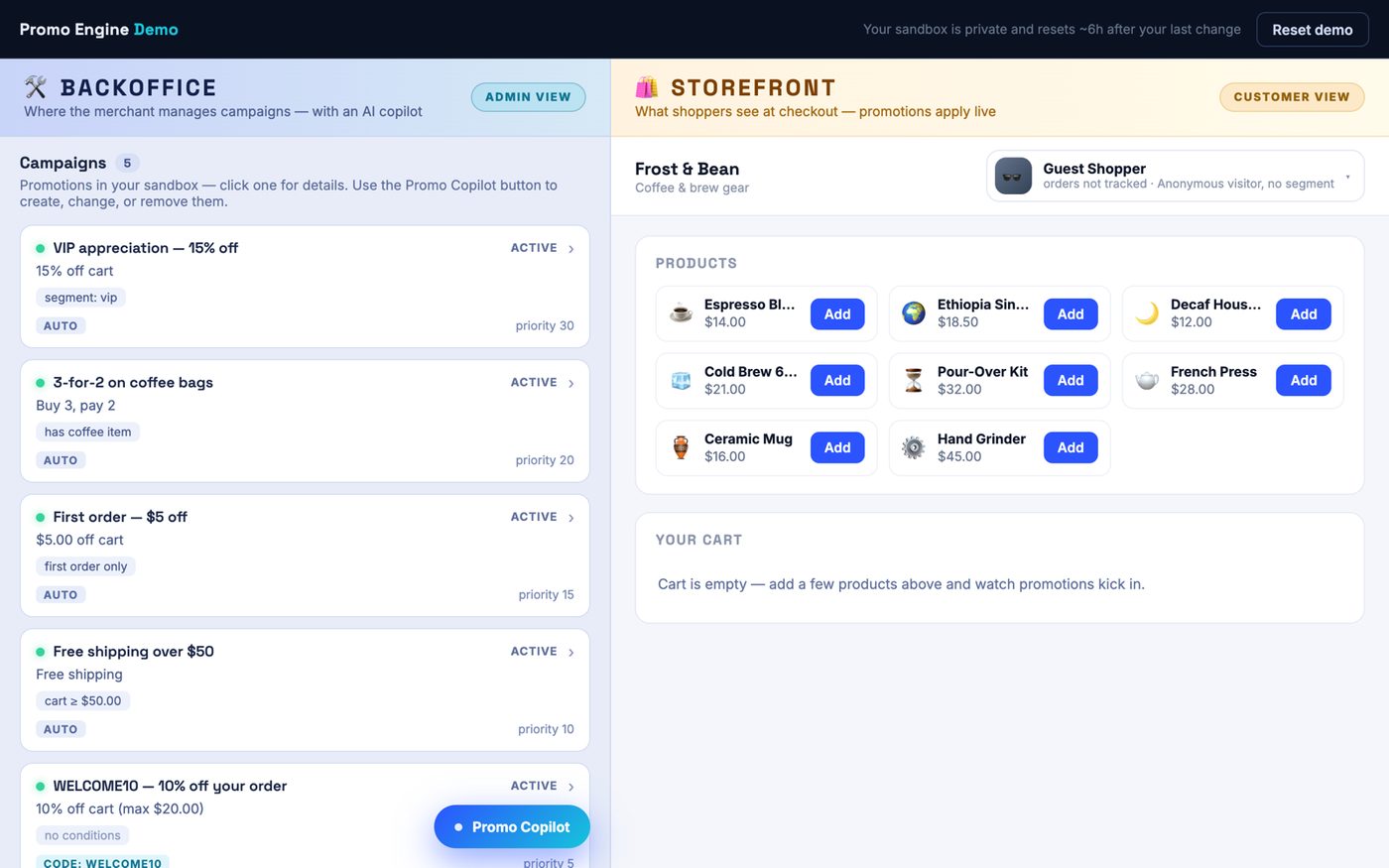
A store that runs itself
An online store whose back office is run by agents toward the day's sales goal.
The agents
- Order triagescreens and releases orders
- Supportchat, email, WhatsApp
- Promotionsoffers inside a margin floor
- Inventory watchnightly stock vs sales
- Morning digestwhat happened, by 8 am
Why agentic
Rules-based automation runs a script and breaks on the first unscripted order. A chatbot only talks. An agentic store decides each case toward the day's goal and escalates the rest, so volume stops mapping to headcount.
A day in the store
Orders and messages arrive from Shopify, Stripe, WhatsApp and email.
Agents act through the store's own operations, never raw database access.
A discount past the margin floor waits for a person.a person decides
Every action is recorded. The digest lands at 8 am.
A loyalty program that runs its own campaigns
For a chain with hundreds of stores: the program finds who is drifting, decides an offer inside the budget, sends it, and measures.
The agents
- Segment scoutwho is drifting, who is rising
- Offer designerthe right offer, inside budget
- Approval gatemarketing signs off big spends
- Senderpush, email, WhatsApp
- Measurementredemptions, lift, stop the losers
Why agentic
A campaign tool needs a marketer to build every segment and offer by hand, so campaigns run weekly and one offer goes to everyone. An agentic program decides per member, per day, inside a budget you set, and shows every decision.
A day in the app
Every night: read yesterday's visits and spend across all stores.
Decide who gets which offer, per member, inside the monthly budget.
Campaigns over the spend threshold wait for marketing.a person decides
Send, measure redemptions, adjust tomorrow's offers.
Built the same way as the store: connectors in, agents on the jobs, rules in code, a person on the gate. See the mechanisms
A marketplace back office that closes its own books
A marketplace paying hundreds of vendors: payouts, disputes and reconciliation handled by agents, with people approving anything that moves money.
The agents
- Reconciliationpayments to orders, daily
- Payout prepeach vendor's run, gated
- Dispute deskevidence gathered, reply drafted
- Vendor deskanswers from real data
- Escalationunexplained variances, with evidence
Why agentic
Scripts clear the 95% that matches; people drown in the 5% that doesn't. An agentic back office works each exception with the evidence in hand, never moves money without approval, and leaves a trail an auditor can read.
A day in the app
Payments, orders and disputes stream in from Stripe and the marketplace.
Match, reconcile, and assemble each vendor's payout run.
Anything that moves money out waits for approval.a person decides
Posted with an audit event. Variances go to a person with the evidence attached.
Built the same way as the store: connectors in, agents on the jobs, rules in code, a person on the gate. See the mechanisms
Spikefrost supplies the tools, the rules and the method.
Your team brings one coding subscription. Everything else is already here.
- AI models
- 90+
- tools
- 440+
- uptime SLA
- 99.9%
- point-in-time recovery
- 30 days
Tools
Connectors
- Slack
- Teams
- Stripe
- Shopify
- Any MCP
Models, from one balance
- Anthropic
- OpenAI
- Meta
- Mistral
- DeepSeek
- Alibaba
- + more
Rules
- Isolation
- Scoped roles
- Approval gates
- Spend limits
- Audit trail
Enforced by the runtime, not by the prompt.
Method
$ sf skills get app_agents
  the method your coding agent loads first

$ sf build
  patterns and rules checked before anything ships

$ sf deploy
  ✓ isolated, audited, live
Your coding agent follows the same playbook every time.
Isolation isn’t a setting. It’s the architecture.
- Own isolate and data per app
- Per-call, short-lived credentials
- Least privilege, enforced in code
- Never trained on your data
Free to start. Pro $25, Business $99 per team per month.
Every model and tool from the team balance at published rates.
Frequently asked questions
What is Spikefrost?
Spikefrost is the AI operating system for enterprises: the tools, rules and method a company's own team uses to build and run agentic apps. A company creates a team, adds funds to one balance, and its people build with their own Claude Code or Codex on every AI model, inside the isolation, permissions, spending limits and audit the company sets.
What is an agentic app?
Software that does the work instead of showing it to people. Agents inside the app hold real jobs: they read your data, use the tools you granted, act under rules written in code across Slack, email, WhatsApp and web chat, run on a schedule, and stop for a person only on the exceptions you gate.
What does Spikefrost cost?
Free for a personal team. Pro is $25 and Business $99 per team per month; Enterprise is custom. AI models, tools and infrastructure are billed from the team's prepaid balance at published rates. Building apps needs one Claude, Codex, Kimi or Grok subscription.
See it built in front of you.
Thirty minutes with an engineer, on your use case.